The Project

EDUCATIONAL PROJECT

The students are the focus. Each one, by name, has a story and something to contribute to the world they belong to. This is fostered through small class sizes and mixed-age groups, which place the focus on enthusiastic learning and shift the emphasis away from comparing students.

At Sevilla Reggio Emilia School, the official national curriculum is taught through multiple forms of communication and active inquiry.

An “inside-out” approach is adopted to foster authentic learning.

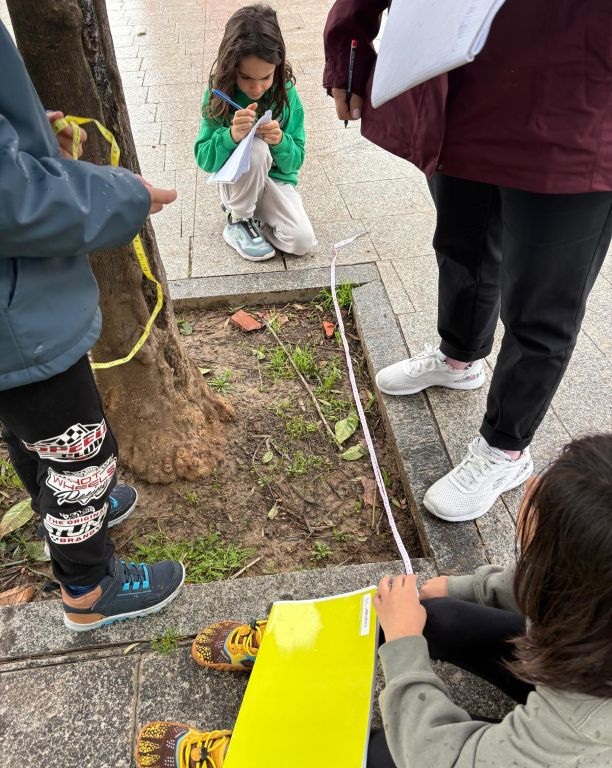
In addition, a daily and direct connection is established with the natural and social environment, so that learning takes on real meaning and practical application.

It is important to note that the bilingual program is fully integrated; the majority of the teaching staff consists of certified bilingual teachers, and English Language and Literature courses are taught by native English-speaking teachers who prepare students in each grade for the official Trinity exams.

Nursery, Kindergarten, Primary and Secondary School

Areas

Work by non-segmented but defined areas

Expression and Communication
Science Laboratory
Motor Skills
Understanding the Natural and Social World
Workshops

Expression
and Communication

Two-dimensional

  • Painting.
  • Drawing.
  • Photography.
  • Graffiti.

Three-dimensional

  • Installations.
  • Architecture.
  • Sculpture.

• Media Arts

  • Projections.
  • Video.
  • Video Art.
  • Film.
  • Video Games.

• Performing Arts

  • Performing arts (music, dance, theater, and physical expression).
  • Performance.

Verbal (Spanish and English)

  • Literature.
  • Creative Writing.
  • Reading Comprehension.
  • Grammar.
  • Syntax.

Non-verbal

  • Music as part of the daily routine; Music Theory.
  • Specialized vocal and instrumental performance.
  • Singing and movement.
  • A recurring, sophisticated, and varied musical program.
  • Screenings of selected music videos appropriate for the students’ age group.
  • “Gift Box” activities.
  • Thought-provoking storytelling.
  • Role-playing games.
  • Museum of thought.
  • Debates.
  • Multisensory experiences.
  • Free play.

Science Laboratory

  • Operations, Calculus, and Arithmetic.
  • Measurements and Quantities.
  • Ordering and Classifying.
  • Buying and Selling.
  • Economics.
  • Algebra.
  • Statistics.
  • Geometry, Topology, and Trigonometry.
  • Mixtures of elements.
  • Transformation of matter.
  • Basic chemical reactions.
  • Physics, optics, and acoustics.
  • Static electricity.
  • Elementary botany: Germination of legumes.
  • Capillarity: Absorption of water colored with food dye by celery leaves or white carnations to understand conducting vessels.
  • Gas laws and thermodynamics: Empirical verification of Boyle-Mariotte’s or Charles’s laws using syringes and balloons.
  • Stoichiometry and reactions: Determining the rate of a chemical reaction (for example, using effervescent tablets at different temperatures).
  • Flame tests: Identification of metal cations (copper, sodium, strontium) based on the color of the Bunsen burner flame.
  • Basic kinematics: Measurement of times and distances using carts and ramps to calculate acceleration and gravity.
  • Microscopy and cytology: Observation of plant cells in the epidermis of an onion and staining of human oral mucosal cells.
  • Advanced cellular studies: Analysis of the mitotic index in onion roots under the influence of everyday substances.
  • Genetic material extraction: Home or laboratory isolation of DNA from fruits such as bananas or strawberries using cold alcohol and dishwashing liquid.
  • Local geology: Identification and classification of local rocks and minerals through hardness tests (Mohs scale) and their reaction to hydrochloric acid.
  • Sky observation: the Sun, the Moon, and the stars.
  • The passage of time associated with the basic cycle of day and night.
  • Moon phases and eclipses.
  • Gravity and the gravitational forces that maintain the orbits of planets and moons.
  • History of Astronomy: From ancient interpretations of the sky to the Copernican Revolution.
  • Celestial Mechanics: Celestial coordinates, use of planispheres, telescopes, and simulation software (such as Stellarium).
  • Astrophysics and Cosmology: The nature of light, stellar spectroscopy, exoplanets, dark matter, and dark energy.
  • Cells
  • Living organisms
  • The human body
  • Genetics and evolution
The best international elementary and high school in Seville.

Motor Skills (physical development)

Gross Motor Skills

  • Free movement.
  • Circuit training.
  • Dance.
  • Free play.
  • Swimming.
  • Traditional sports.

Fine Motor Skills

  • Puzzles, shape sorters, and fine motor skills exercises.
  • Knitting, embroidery, and sewing.
  • Graphomotor skills.
  • Free drawing.
  • Guided drawing.
  • Writing.
  • Modeling.
  • Architecture.
  • Mechanics.
  • Road Safety Education.
  • Free movement connected to nature that helps individuals reach their full potential in terms of motor development.
  • Adventure and nature activities.
  • Traditional sports.
  • Traditional outdoor games.

Understanding the Natural and Social World

  • Light and darkness.
  • Lights and shadows.
  • Working with various materials.
  • Cooking.
  • Vegetable garden.
  • Planting, caring for, harvesting, and processing.
  • Animal visits.
  • Visits to natural environments near and far.
  • Research projects on the animal and plant worlds.
  • Personal hygiene.
  • Cleanliness and order.
  • Household chores.
  • Symbolic play.
  • Professionals and establishments.
  • Means of transportation.
  • Museums.
  • Library.
  • Institutional headquarters.
  • Natural elements of the city.
  • Structures of human organization.
  • First aid in emergency situations.
  • Preventive measures.
  • Use of materials to ensure well-being.
  • The Earth: The environment and landscapes, orientation and maps, water and climate. Andalusia, Spain, Europe, and the rest of the world.
  • The universe.
  • Past eras.
  • Human organizations.
  • Visits to museums, archaeological sites, and institutional venues.
  • Ecology, Sustainability, and Healthy Habits.
  • Digital Devices.
  • Operating and Communication Systems.
  • Personal Learning Environment in Digital Contexts.
  • Digital Safety and Well-Being.
  • Critical Digital Citizenship.
  • Analysis and development of the entrepreneurial profile.
  • Economic, business, social, environmental, cultural, and artistic spheres.
  • Acquisition and management of human, material, intangible, and digital resources.
  • Self-knowledge and moral autonomy.
  • Society, justice, and democracy.
  • Sustainable development and environmental ethics.
Colegio Internacional Reggio Emilia de Sevilla

Workshops

Woodworking
Crafts

Sewing

Plumbing

Construction
Cooking
Electricity
Robotics
Gardening

Surprising and artistic parents’ school and meetings

Shared park and leisure